
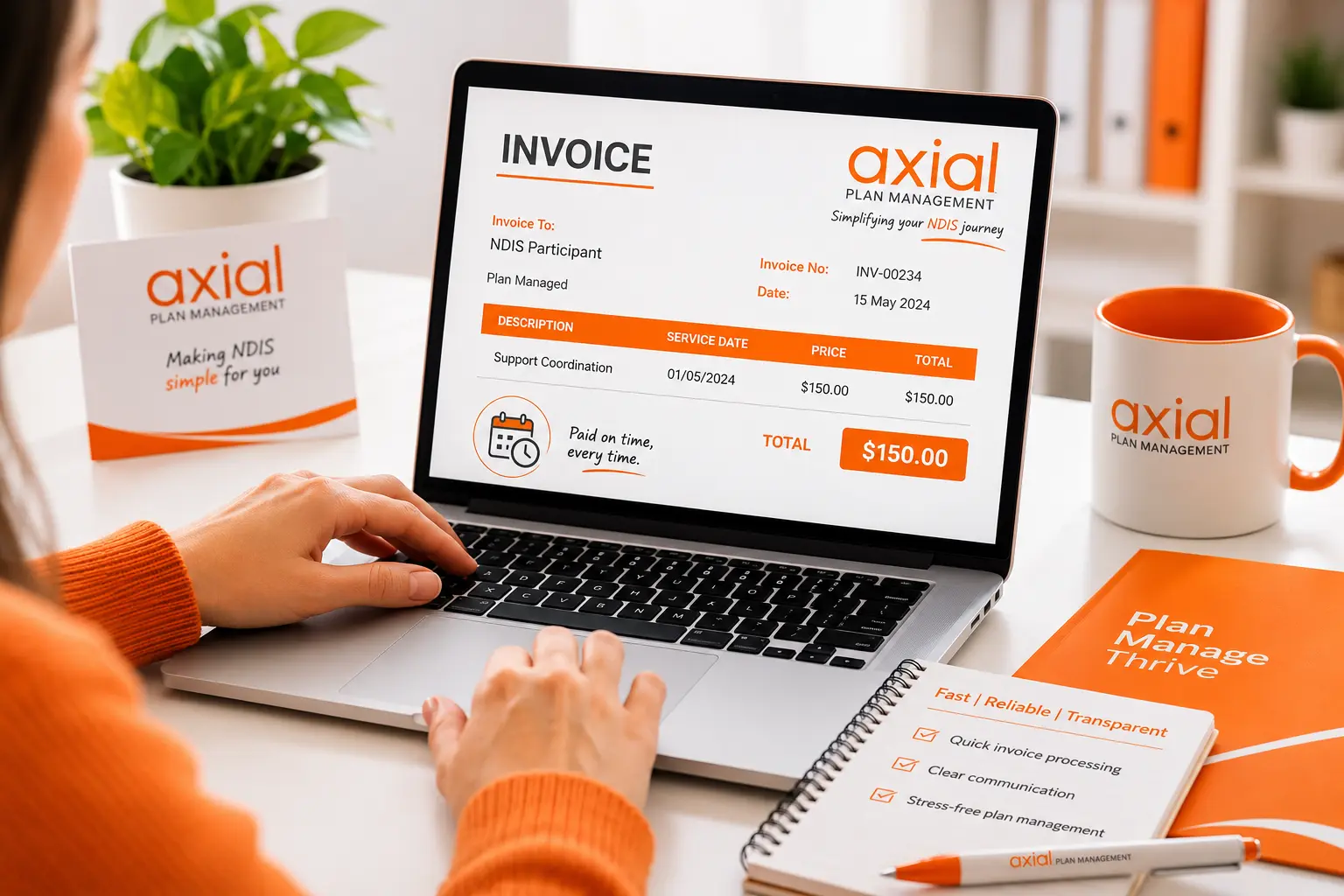
Most NDIS plan managers should process and pay compliant invoices within 3–5 business days. However, NDIA payment processing can sometimes extend the timeline to 10 business days.
Why Invoice Payment Timeframes Matter in NDIS Plan Management
Fast invoice payments help providers continue delivering supports without disruption.Delayed payments can affect service bookings, provider relationships, and participant confidence.For NDIS participants, understanding reasonable payment timeframes helps identify when delays may require follow-up.A plan manager’s role includes reviewing invoices, submitting claims, tracking budgets, and paying providers from plan-managed funding.
What Is Considered a Reasonable Invoice Payment Timeframe?
While the NDIS does not set a mandatory payment deadline for plan managers, industry standards are relatively consistent.
| Payment Stage | Typical Timeframe |
| Invoice received by plan manager | Same day to 1 business day |
| Invoice compliance review | 1–2 business days |
| NDIA claim processing | 2–3 business days |
| Funds reaching bank account | 1–2 business days |
| Total payment timeframe | Usually 3–5 business days |
Sources across the NDIS sector consistently show valid claims are generally processed within 2–3 business days by the NDIA, although some claims may take up to 10 business days for additional checks.
How Does the Invoice Payment Process Work?
Step 1: Provider Submits an Invoice
The provider sends an invoice to the participant or plan manager.
Step 2: Invoice Review
The plan manager checks:
- Participant details
- NDIS number
- Service dates
- Support item codes
- Invoice amount
- Provider details
- Compliance with NDIS requirements
A compliant invoice helps payments move faster.
Step 3: Claim Submission
The plan manager submits the claim through the NDIS payment system.
Step 4: NDIA Processing
Valid payment requests are generally processed within 2–3 business days.Some payments may require additional verification.Those claims can take up to 10 business days.
Step 5: Provider Payment
Once funds are released, the provider receives payment.Bank processing may add another 1–2 business days.
Why Do Some Invoice Payments Take Longer?
Not every delay is caused by the plan manager.Several factors can slow the process.
Incomplete Invoice Information
Missing details often trigger payment delays.
Common issues include:
- Missing participant number
- Incorrect support item code
- Missing service dates
- Invalid invoice number
- Missing provider details
Incorrect invoices usually require correction before payment.
Additional NDIA Reviews
The NDIA may review certain claims more closely.
This can extend payment processing to approximately 10 business days.
Provider Submission Delays
Some providers submit invoices weeks after services are delivered.
This naturally delays the overall payment cycle.
High Invoice Volumes
Public holidays and busy periods can create processing backlogs.
What Should Participants Expect From a Good Plan Manager?
A quality plan manager should provide:
- Fast invoice processing
- Clear communication
- Budget tracking
- Payment status updates
- Regular statements
- Prompt responses to payment questions
Many participants now compare plan managers based on invoice turnaround times.
Signs Your Invoice Payment Is Taking Too Long
You may need to follow up if:
- More than 7 business days have passed
- Providers report unpaid invoices
- No payment updates are available
- Multiple invoices experience delays
- Communication becomes inconsistent
Before escalating concerns, confirm the invoice was submitted correctly.Many unpaid invoices result from compliance issues rather than funding shortages.
How to Help Your Invoices Get Paid Faster
Check Invoice Accuracy
Ensure invoices contain:
- Provider business name
- ABN
- Participant name
- NDIS number
- Service dates
- Invoice number
- Support description
- Total amount
These details reduce processing delays.
Submit Invoices Promptly
Late submissions create avoidable delays.
Monitor Your Budget
Regular budget reviews help identify payment issues early.
Use a Responsive Plan Manager
A proactive plan manager can quickly resolve invoice queries.
When Should You Contact Your Plan Manager?
Contact your plan manager if:
- A provider reports non-payment
- An invoice remains unpaid after 7 business days
- You notice unusual payment delays
- Funding appears available but payments are pending
Early communication often prevents larger issues.
Frequently Asked Questions
How quickly should a plan manager process an invoice?
Most plan managers process compliant invoices within 3–5 business days, depending on NDIA processing times.
Can NDIS invoice payments take 10 business days?
Yes. Some claims undergo additional verification and may take up to 10 business days.
Why has my provider not been paid yet?
The most common cause is an incomplete or non-compliant invoice.
Does the NDIA pay providers directly?
For plan-managed funding, the plan manager submits claims and pays providers on behalf of participants.
Can I change plan managers if payments are consistently delayed?
Yes. Participants can change plan managers if they are unhappy with service quality or payment performance.
Final Thoughts
Most NDIS plan managers should pay compliant invoices within 3–5 business days. Delays beyond this timeframe should have a clear explanation.The fastest payments usually happen when invoices are accurate, compliant, and submitted promptly.If payment delays become recurring, it may be worth reviewing your current plan management arrangements and discussing expected service standards.Need help understanding invoice payments or managing your NDIS funding more effectively? Contact Axial Plan Management today and speak with a team that prioritises clear communication, accurate processing, and timely invoice payments.