
This comprehensive guide breaks down NDIS funding mechanisms, budget categories, and management options so participants can maximize their allocated support with total clarity and confidence.
Navigating the National Disability Insurance Scheme (NDIS) can often feel like learning a whole new language. Between funding categories, service agreements, and price guides, understanding your approved plan budget is vital to receiving the support you deserve.
At its core, NDIS funding provides individual financial allocations to eligible Australians living with a permanent and significant disability. Rather than issuing direct cash payments, the National Disability Insurance Agency (NDIA) allocates budgets directly tied to approved goals and reasonable and necessary disability related needs.
How to Apply for NDIS and Set Up Your Budget
Before you can access or spend any funding, you must first confirm your eligibility and submit an application. If you are wondering about the steps to get started, review our step by step walkthrough on how to apply for NDIS.
Once accepted into the scheme, you will complete a planning meeting with an NDIA representative or Local Area Coordinator (LAC). During this meeting, you discuss your everyday challenges, personal goals, and necessary support. The agency then builds your official NDIS plan containing individual funding allocations across three main support categories.
The Three Primary NDIS Support Categories Explained
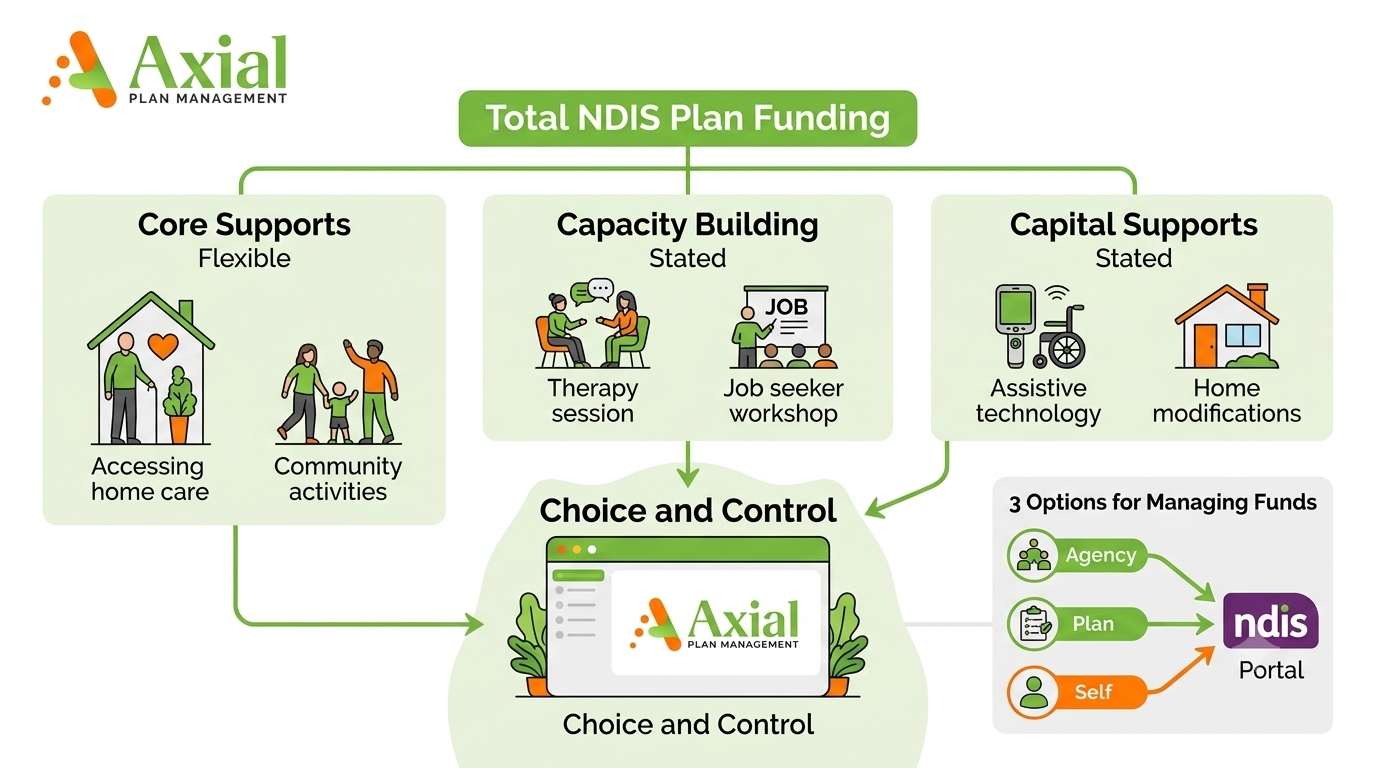
Your NDIS plan budget is split into distinct categories, each designed for specific types of services and equipment.
┌─────────────────────────────────┐
│ Total NDIS Plan Funding │
└────────────────┬────────────────┘
│
┌───────────────────────────────────────────┼───────────────────────────────────────────┐
▼ ▼ ▼
┌─────────────────┐ ┌─────────────────┐ ┌─────────────────┐
│ Core Supports │ │Capacity Building│ │ Capital Supports│
│ (Most Flexible)│ │ (Skill & Growth)│ │ (Stated Funds) │
└────────┬────────┘ └────────┬────────┘ └────────┬────────┘
│ │ │
├─ Daily Life Assistance ├─ Support Coordination ├─ Assistive Tech
├─ Consumables ├─ Allied Health / Therapies ├─ Home Mods
└─ Social Participation └─ Employment Supports └─ Vehicle Mods
1. Core Supports (Your Everyday Budget)
Core Supports cover everyday activities and immediate disability related needs. In most cases, Core is the most flexible budget category in your plan. You can move allocated funds across different sub categories depending on your changing daily requirements.
- Assistance with Daily Life: Personal care, showering, domestic cleaning, and support worker assistance.
- Consumables: Essential everyday items like continence products or low cost assistive technology.
- Assistance with Social & Community Participation: Support workers to assist you in joining sports, attending social groups, or visiting local events.
2. Capacity Building Supports
Capacity Building funding is designed to help you build skills, increase independence, and achieve your long term goals. Unlike Core Supports, Capacity Building funds are stated, meaning they are assigned to specific categories and cannot be moved between sub categories.
- Improved Daily Living: Occupational therapy, speech therapy, physiotherapy, and psychology sessions.
- Support Coordination: Financial allocation to hire a coordinator who helps you implement your plan.
- Finding and Keeping a Job: Employment assistance and workplace skill development.
- Improved Relationships: Positive behavior support strategies.
3. Capital Supports (Equipment and Modifications)
Capital Supports are allocated for high cost equipment, assistive technology, or home modifications. These funds are strictly stated for specific, approved items.
- Assistive Technology: Wheelchairs, electric beds, or customized communication devices.
- Home Modifications: Access ramps, bathroom alterations, or stair lifts.
For a deeper dive into practical strategies for managing these allocations, read our detailed guide on how NDIS funding works.
Capacity Building budgets include specific funding for financial administration, meaning participants can hire professional support at zero out-of-pocket cost. Selecting the right NDIS plan manager ensures your monthly balance is tracked accurately and claims are processed within statutory timeframes. For service providers submitting claims against these balances, following strict NDIS invoice requirements and line-item rules prevents unnecessary payment holds.
What Does “Reasonable and Necessary” Mean?
To spend your NDIS funding on a service or product, it must satisfy the NDIA Reasonable and Necessary criteria. Before purchasing supports, confirm that the expense:
- Relates directly to your disability.
- Helps you achieve the goals listed in your NDIS plan.
- Represents good value for money.
- Is likely to be effective and beneficial for your circumstances.
- Does not replace informal supports provided by family, friends, or community networks.
- Is not an everyday living expense unrelated to your disability (such as regular groceries, rent, or standard power bills).
The Three Options for Managing NDIS Funds
You have complete control over how your approved budget is financially administered.
| Management Type | How Invoices Are Paid | Provider Options | Admin Effort |
| NDIA Managed (Agency) | The NDIA pays service providers directly via the portal. | Only NDIS-registered providers. | Lowest. |
| Plan-Managed | An independent plan manager processes and pays claims for you. | Registered and non registered providers. | Low (Hands free). |
| Self Managed | You pay providers directly and request reimbursements from the NDIS. | Registered and non registered providers. | High.all plan management fee fees. For extra tips on tracking your categories without running out of funds before your |
Choosing Plan Management costs nothing out of your support budget! The NDIA provides additional, separate funding under “Improved Life Choices” to cover plan end date, explore our guide on understanding your NDIS budget and managing funds.
Managing NDIS funding should be stress free, empowering you to focus on your personal goals rather than bookkeeping. If you want seamless invoice tracking, fast provider payments, and expert assistance navigating your budget, feel free to contact us today.
Conclusion
Understanding how does ndis funding work is the ultimate key to unlocking your plan’s potential. By knowing the differences between Core, Capacity Building, and the right management option, you can take total control of your journey. Partner with Axial Plan Management today to simplify your budget management, eliminate administrative headaches, and make every dollar work for your future.
Capital budgets, adhering to reasonable and necessary guidelines, and selecting