
The most common NDIS invoice mistakes include incorrect participant details, wrong support item numbers, missing invoice information, pricing errors, duplicate claims, and delayed submissions. These issues can delay payments, create compliance risks, and increase administrative work for providers.Whether you are an established provider or new to the NDIS, accurate invoicing is essential. A small mistake can result in delayed payments, rejected claims, or additional reviews.This guide explains the most common invoicing mistakes providers make and practical ways to avoid them.
Why Accurate NDIS Invoicing Matters
Submitting accurate invoices benefits everyone involved.For providers, it supports healthy cash flow and reduces administrative work.For participants, it helps ensure supports are paid correctly and on time.The NDIS also requires providers to submit truthful, complete, and accurate payment claims that align with participant funding and pricing arrangements.
The 10 Most Common NDIS Invoice Mistakes Providers Make
Incorrect Participant Details
One of the most common mistakes is entering incorrect participant information.
Examples include:
- Wrong participant name
- Incorrect NDIS number
- Outdated participant details
- Invoice prepared for the wrong participant
Even one incorrect digit can delay payment processing.Always verify participant information before sending an invoice.
Using the Wrong Support Item Number
Every support should match the appropriate NDIS support item.Using the wrong support item may result in payment delays or rejected claims.
Before invoicing, confirm that the support item matches:
- The service delivered
- The participant’s funding
- The current NDIS Support Catalogue
Checking these details before submission reduces unnecessary corrections.
Charging Above NDIS Price Limits
Many providers forget to check the latest Pricing Arrangements and Price Limits.Charging above the applicable price limit may cause payment issues for NDIA-managed and plan-managed participants.
Good practice includes:
- Reviewing updated pricing
- Confirming hourly rates
- Checking travel and cancellation rules
- Updating billing software regularly
Providers should always invoice within applicable pricing arrangements where required.
Missing Required Invoice Information
Incomplete invoices are another common reason for payment delays.
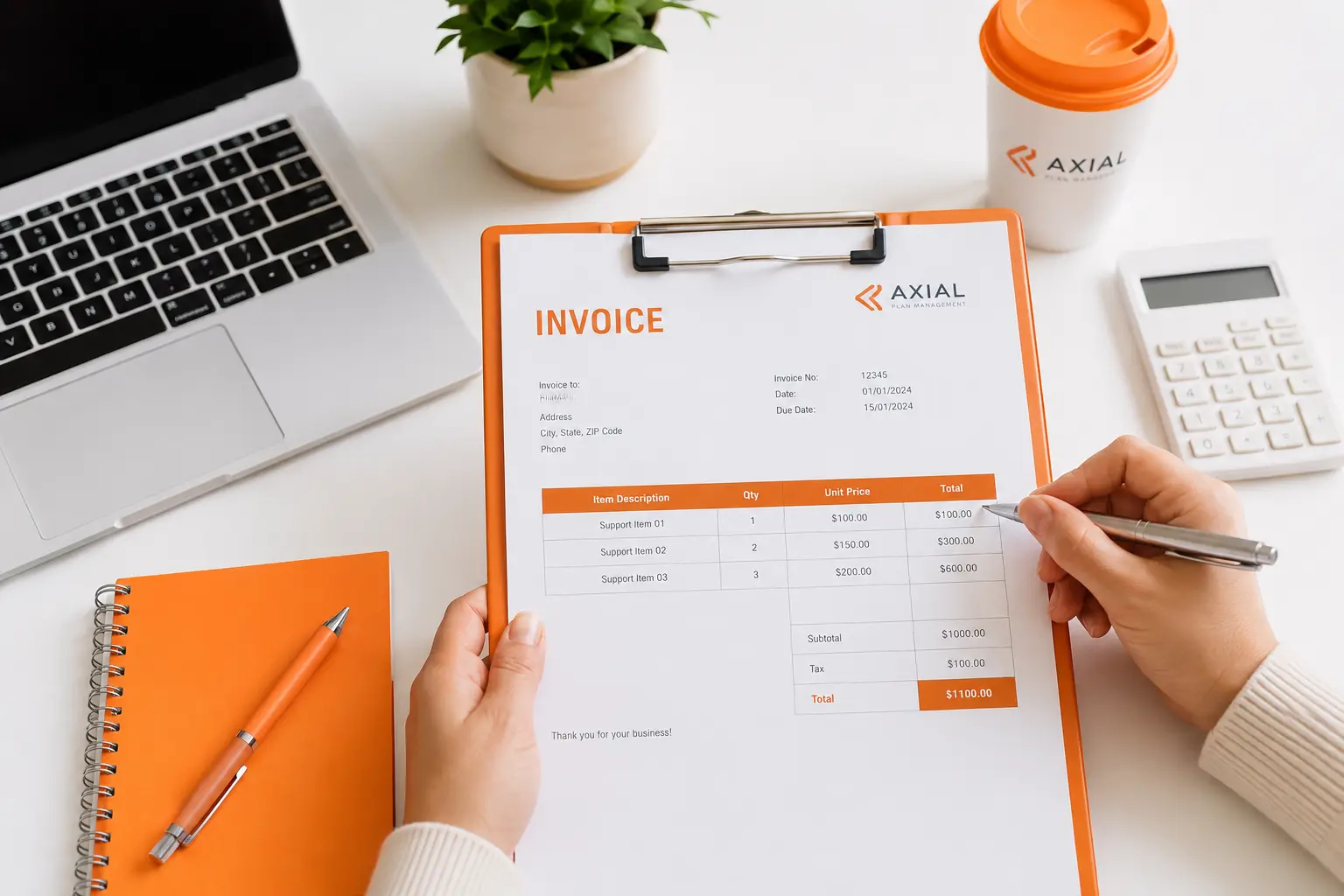
An NDIS invoice should generally include:
- Business name
- ABN (or approved exemption)
- Invoice number
- Participant name
- Participant NDIS number
- Date of support
- Support item number
- Description of supports
- Quantity or hours
- Unit price
- Total amount
- GST information where applicable
Missing information often means additional follow-up before payment can proceed.
5. Claiming Before Services Are Delivered
Providers should only request payment after delivering the agreed support.Submitting claims before services are provided can create compliance concerns.Keeping accurate service records helps confirm when supports were delivered.
Duplicate Invoice Submission
Duplicate invoices usually happen accidentally.
Common causes include:
- Sending invoices twice
- Uploading duplicate claims
- Poor invoice tracking
- Staff communication errors
Duplicate submissions create unnecessary administration for both providers and plan managers.
Using invoice tracking software helps reduce this risk.
Incorrect Service Dates
Service dates should accurately reflect when supports were delivered.
Common issues include:
- Future dates
- Incorrect months
- Overlapping appointments
- Wrong billing period
Always compare invoices with support logs before submitting claims.
Poor Record Keeping
Invoices are only one part of provider documentation.The NDIS expects providers to maintain complete and accurate records.
These may include:
- Service agreements
- Support logs
- Rosters
- Case notes
- Invoices
Good records help verify payment claims during reviews.
Invoices That Do Not Match the Service Agreement
Your invoice should reflect what was agreed with the participant.Differences between the service agreement and invoice may create payment questions.
Review:
- Support type
- Frequency
- Agreed pricing
- Delivered hours
Consistency helps reduce unnecessary delays.
Waiting Too Long to Submit Invoices
Delaying invoice submission can affect cash flow.The NDIS recommends requesting payment as soon as practical after delivering supports.For NDIA-managed participants, payment requests generally need to be submitted within the required timeframe.
Common Invoice Mistakes and Their Impact
| Mistake | Possible Impact | Prevention |
| Incorrect participant details | Payment delays | Verify participant information |
| Wrong support item | Claim rejection | Check the Support Catalogue |
| Pricing errors | Payment adjustment | Review current price limits |
| Missing invoice information | Manual review | Use an invoice checklist |
| Duplicate claims | Processing delays | Track submitted invoices |
| Incorrect dates | Additional verification | Compare with service records |
| Poor documentation | Compliance risk | Maintain accurate records |
NDIS Invoice Checklist
Before sending an invoice, confirm you have included:
✅ Participant name
✅ NDIS number
✅ Business name
✅ ABN (or exemption)
✅ Invoice number
✅ Invoice date
✅ Service date
✅ Support item number
✅ Description of support
✅ Quantity or hours
✅ Unit price
✅ Total amount
✅ GST information where applicable
✅ Correct calculations
✅ Matching service agreement
How Plan Management Helps Reduce Invoice Errors
For plan-managed participants, providers send invoices directly to the participant’s nominated plan manager.An experienced plan manager can help identify missing information before payment processing begins.This can reduce unnecessary delays and improve communication between providers and participants.At Axial Plan Management, providers receive a straightforward invoicing process, timely communication, and support that helps minimise avoidable payment issues. While providers remain responsible for submitting accurate invoices, working with an experienced plan manager can make the overall payment process smoother.
Best Practices for Providers
Follow these habits to improve invoice accuracy:
- Review every invoice before sending.
- Verify participant information.
- Use current support item numbers.
- Check applicable pricing limits.
- Keep detailed service records.
- Submit invoices promptly.
- Train administration staff regularly.
- Maintain organised digital records.
- Use consistent invoice templates.
- Monitor rejected or returned invoices for recurring issues.
Frequently Asked Questions
What information should be included on an NDIS invoice?
Invoices generally include participant details, NDIS number, service dates, support item numbers, quantities, prices, invoice number, business information, and total payable amount.
Why are NDIS invoices rejected?
Invoices may be rejected because of missing information, incorrect participant details, pricing issues, duplicate claims, or claims that do not comply with NDIS requirements.
Can incorrect support item numbers delay payment?
Yes. Incorrect support item numbers can require additional review and may delay payment processing.
Should providers submit invoices immediately?
Providers should request payment as soon as practical after delivering supports. Prompt invoicing supports faster payment processing.
What records should providers keep?
Providers should keep invoices, service agreements, support logs, rosters, and case notes to support payment claims and compliance.
Can plan managers help with invoice processing?
Yes. For plan-managed participants, providers send invoices to the participant’s plan manager, who processes eligible claims in line with NDIS requirements.
Final Thoughts
Accurate invoicing is more than an administrative task. It helps providers receive payments faster, reduces compliance risks, and improves the participant experience.By checking participant details, using the correct support items, following current pricing arrangements, and maintaining complete records, providers can significantly reduce common invoicing mistakes.If you support plan-managed participants, Axial Plan Management works with providers to make invoice processing more efficient, helping reduce delays while maintaining a smooth payment experience for everyone involved.